
Grass Fed Beef Buying Tips
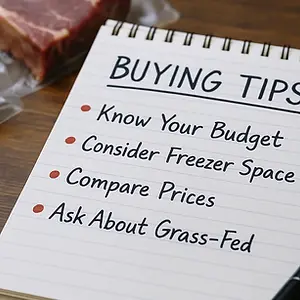
Buying grass fed beef is a rewarding experience, but it requires a different approach compared to purchasing conventional beef. This guide will help you know the key factors to consider before making a purchase, ensuring that you find the right source, quantity, and format of beef to fit your needs. Understanding the terminology, sourcing, costs, cuts, and storage requirements ahead of time will make the process smooth and successful, as shown in the tips outlined below.
Why Buying Grass Fed Beef Is Different
Buying grass fed beef requires a better understanding of sourcing, processing, and purchasing than buying conventional beef from a grocery store.
Grass-fed beef varies significantly depending on how cattle are raised, finished, processed, and marketed, creating a need for buyers to carefully evaluate their options. Unlike mass-market beef, grass-fed beef is often sold directly through ranchers, butchers, or online subscriptions, making it critical to be an informed consumer.
According to the USDA’s Cattle & Beef: Sector at a Glance, consumer interest in beef is increasingly shaped by preferences for transparency, perceived health benefits, and ethical sourcing.
Understand the Terminology Before You Buy
Before committing to a purchase, it is essential to understand the terminology commonly used in grass fed beef transactions.
Grass Fed vs Grass Finished: Not all grass fed beef is grass finished. Some cattle are started on grass but finished on grain.
Hanging Weight vs Take-Home Packaged Weight: Pricing often depends on hanging weight, not final packaged weight. Knowing the difference can prevent confusion later.
Custom-Exempt vs USDA-Inspected Processing: How beef is inspected impacts whether it can be sold retail or only through private sale agreements. Learn the difference between custom exempt and USDA inspected beef.
Organic, Natural, and Pasture-Raised Labels: Not all labels mean the same thing. Organic beef must meet specific standards, while "natural" and "pasture-raised" claims vary.
Understanding key terms helps buyers avoid costly misunderstandings. A 2022 study in Meat and Muscle Biology found that labeling claims like “grass-fed” and “natural” significantly influence consumer perceptions, even when the product is identical.
Tip #1: Know Your Beef Source
Knowing your beef source is one of the most important steps in buying grass fed beef.
Ask ranchers and butchers about their raising and finishing practices, certifications, and how they verify their claims. Transparency is a key sign of quality, and sourcing from reputable operations like those listed in our directory ensures higher standards.
If possible, visit the farm or ranch, or research customer reviews and processing certifications to ensure the operation aligns with your values.
Tip #2: Choose the Right Quantity for Your Household
Choosing the right quantity prevents both overspending and freezer storage problems.
Purchasing a whole, half, quarter, or eighth share will depend on:
-
Your household size
-
Your freezer space
-
Your budget
-
Your beef consumption habits
If buying a larger quantity feels overwhelming, consider partnering with friends or family to split a larger share.
To help you decide what share size makes the most sense for your household, here’s a simple flowchart that walks through each step:

Tip #3: Learn the Cuts and How You’ll Use Them
Understanding different beef cuts ensures you know what you’re buying and how you’ll cook it.
When buying shares, cuts are often predetermined by a cut sheet. Some cuts, like ribeyes and tenderloins, are highly desirable, while others like roasts or stew meat may require different cooking methods.
Tip #4: Be Prepared for the Upfront Cost
Buying grass fed beef typically requires an upfront payment, which is structured differently than buying individual cuts at a store.
Prices are usually quoted by hanging weight (e.g., $5.50 per pound), and additional processing fees may apply. Some sellers include processing in their total cost, while others separate it.
Tip #5: Plan for Storage
Proper storage planning is crucial when buying bulk grass fed beef.
A general rule of thumb:
-
A quarter share usually requires about 4–5 cubic feet of freezer space
-
A half share needs around 8–10 cubic feet
-
A whole cow may require 16–20 cubic feet
To better visualize what kind of freezer space you’ll need for each beef share, take a look at the breakdown below:

Packaging types—such as vacuum-sealed versus butcher paper—affect both freezer longevity and space efficiency.
Tip #6: Communicate Clearly With Your Rancher or Butcher
Clear communication with your seller avoids surprises at pickup or delivery.
Make sure you discuss:
-
Processing timelines
-
Cut sheet preferences
-
Inclusion of offal, soup bones, or specialty cuts
-
Delivery or pickup logistics
If you are ordering through a CSA, understanding the process ahead of time ensures you meet deadlines and expectations.
Asking these questions early protects your investment and helps ensure a better buying experience.
Common Mistakes to Avoid
Avoid these pitfalls when buying grass fed beef for the first time:
-
Overestimating Storage Space: Know your freezer’s capacity before you order.
-
Misunderstanding Weights: Hanging weight is not the same as packaged weight.
-
Assuming Grass Fed Means Grass Finished: Always verify finishing practices.
-
Skipping the Cut Sheet Discussion: Review available cuts and customize when possible.
-
Not Knowing the Inspection Status: Understand whether your beef is USDA inspected or custom exempt.
Notably, the Power of Meat 2017 report found that consumers frequently reported confusion around weights, pricing models, and processing options when purchasing meat, often leading to dissatisfaction. This underscores the importance of clear communication and education in direct-to-consumer meat sales.
From Learning to Buying: Your Grass Fed Beef Options
Once you're ready to move forward, the next step is deciding where to buy your grass fed beef and which quantity best fits your needs. You can source beef directly from local ranches and farms, visit a trusted butcher, dine at grass-fed restaurants, or explore subscription-based delivery services for added convenience. From there, choose the quantity that works for you—whether it's a whole, half, quarter, or eighth share. For a full breakdown of your options, check out our articles on where to buy grass fed beef and buying grass fed beef in bulk.
Conclusion
Buying grass fed beef is a rewarding choice when approached with the right knowledge. By understanding terminology, evaluating sources, choosing the right quantity, and planning for storage and communication, you can confidently buy high-quality beef that meets your household’s needs.
2025-12-9
2026-2-17
Sources:
United States Department of Agriculture. Cattle & Beef: Sector at a Glance. Economic Research Service, 8 Jan. 2025, www.ers.usda.gov/topics/animal-products/cattle-beef/sector-at-a-glance. Harr, Keayla M., et al. "Labeling Terms and Production Claims Influence Consumers’ Palatability Perceptions of Ground Beef." Meat and Muscle Biology, vol. 6, no. 1, 2022, pp. 1–11. Roerink, Anne-Marie. The Power of Meat 2017. 210 Analytics, LLC, 2017, www.meatconference.com/sites/default/files/books/Power_of_meat_2017.pdf.