

Home > Learn > Quantity & Purchasing > Buying a Half Cow
Buying a Half Cow: What You Get, Cost, Cuts, and Storage
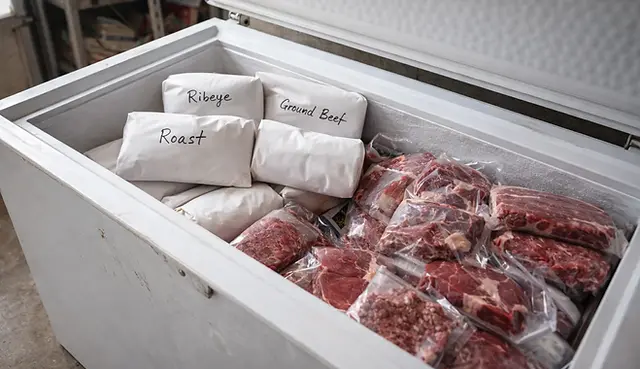
Buying a half cow means purchasing one-half of a beef animal directly from a farm, typically priced by hanging weight and custom processed to your preferences. This guide helps you know what to expect, including total cost, how much beef you’ll receive, freezer space needs, where to buy, and how cuts, processing, storage, pickup, and customization come together.
Half Cow Cost, Yield, and Freezer Space (Quick Snapshot)
Typical Half cow cost (U.S.):
-
$1,600- $3,500 total, depending on how the animal is finished, regional pricing, and processing choices
-
Most ranches price by hanging weight at $6.00 - $10.00 per pound
-
Processing fees may be included or charged separately
What you take home:
-
180-220 pounds of packaged beef
-
A mix of steaks, roasts, ground beef, and specialty cuts
-
Vacuum-sealed and freezer-ready
Freezer space required:
-
8-10 cubic feet
Why prices vary: Half cow pricing differs based on how the animal is raised and finished, local market conditions, carcass size, and butchering preferences. The calculator below helps estimate your actual cost based on the option you choose.
👉 Estimate your total cost based on weight, and processing:
Estimate price, yield, and freezer space
Need to spread out the upfront cost? View financing options →
For a broader overview of how grass-fed beef is priced, including typical ranges and factors that influence cost, see our grass-fed beef cost guide.
Where Can I Buy Half a Cow?
Most half cows are purchased directly from farms and ranches. Because availability, pricing, pickup options, and delivery methods vary by state, buyers usually begin by comparing👉 grass-fed beef producers by state.
How Buying a Half Cow Works
-
Select a ranch offering half-cow shares
-
Reserve your portion with a deposit
-
Customize your cut sheet with the butcher
-
Pick up or receive delivery once processing is complete
The sections below explain pricing structure, meat yield, packaging, freezer storage, and customization options in detail. For a complete walkthrough of the reservation, processing, and fulfillment timeline, see our bulk beef buying process guide.
How Much Meat Do You Get from Half a Cow?
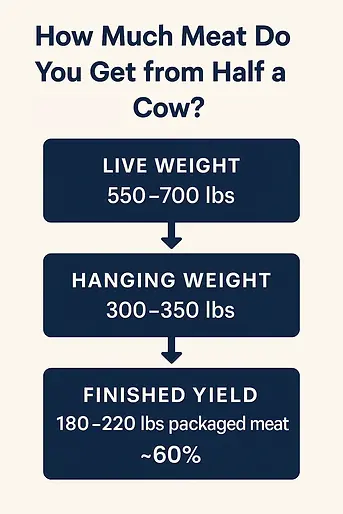
From a half cow, buyers typically receive between 180 to 220 pounds of packaged weight. The actual amount can vary depending on the animal's breed, age, and your selected butchering preferences. Understanding the difference between live weight, hanging weight, and finished weight is crucial for managing expectations.
What Is the Live Weight of a Half Cow?
The live weight of a full cow generally ranges between 1,100 and 1,400 pounds. Therefore, a half cow live weight will typically fall between 550 and 700 pounds. Live weight is primarily informational, helping you understand the progression toward finished yield.
What Is the Hanging Weight?
Hanging weight refers to the carcass weight after initial field dressing but before butchering into individual cuts. For a half cow, expect a hanging weight of approximately 300 to 350 pounds. This is the typical basis for pricing the beef share.
How Much Finished (Packaged) Meat Do I Take Home?
Buyers typically take home around 60% of the hanging weight as finished meat. From a 325-pound hanging weight, you would expect approximately 195 pounds of packaged weight, depending on butchering preferences.
To make this easier to understand, here’s a visual of how live weight turns into the meat you actually take home:
Note: A study from the University of Tennessee shows that a 1,200-pound beef animal typically yields a 750-pound hot carcass weight, which translates to around 500 pounds of packaged beef after trimming and deboning [1].
What’s the Meat Loss During Processing?
Processing usually results in a 35% to 40% reduction from hanging weight to packaged beef due to bone removal, fat trimming, and dehydration during aging. Custom cut preferences (e.g., more boneless options) can affect the final yield.
How Many Calories Are in a Half Cow?
A half cow typically yields about 180–220 pounds of packaged beef. At roughly 800–1,200 calories per pound depending on fat content, that equals approximately 145,000–265,000 total calories — a significant food reserve for households that consume beef regularly.
How Is Half a Cow Butchered and Packaged?
After slaughter, your half cow is divided into standard primal cuts, then customized based on your cut sheet instructions. Typical packaging includes vacuum-sealing to preserve freshness and facilitate longer freezer life. Options such as paper wrapping may also be available upon request.
What Are the Most Common Cuts from a Half Cow?
A typical half cow will yield a balanced distribution of steaks (ribeye, sirloin, T-bone), roasts (chuck, brisket, rump), ground beef, short ribs, and stew meat. Cut allocation can be adjusted based on your cooking needs and preferences.
Here’s a breakdown of what cuts you can expect from a typical half cow:

Can I Customize the Cut Sheet?
Yes. You can specify steak thickness, roast size, number of ground beef packages, and whether to retain items like soup bones and organ meats. Customizing your cut sheet ensures the final product suits your household's meal preferences.
Can I Ask the Butcher for Specific Preferences?
Absolutely. You can request specific modifications, such as thinner steaks, fewer roasts, more ground beef, or specialty cuts like oxtail or hanger steak. Many butchers welcome a direct conversation to clarify custom instructions.
To help you think through your preferences, here’s a checklist of customization options you can request from the butcher:

Are Specialty Cuts Like Bones, Organs, or Fat Included?
Soup bones, liver, heart, tongue, and suet are often available upon request. Some processors include these by default; others require you to opt in on the cut sheet.
How Is the Meat Packaged?
Most processors vacuum-seal cuts for maximum shelf life and quality retention. Each package is labeled with the cut name and weight for easy organization. Traditional butcher paper wrapping is sometimes available by request.
How Much Freezer Space Do I Need for a Half Cow?
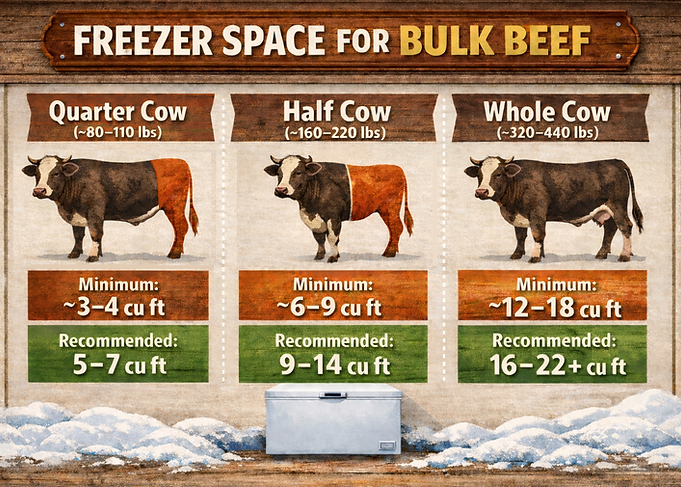
You will need about 6 to 9 cubic feet of freezer space to store a half cow. A dedicated chest freezer or upright freezer is typically necessary to handle the volume. However, more cubic feet of space is recommended for proper airflow and circulation.
Check the graphic below to see recommended cubic feet of freezer space for different bulk beef sizes:
How Long Does the Meat Last in the Freezer?
Vacuum-sealed beef can last up to 2 to 3 years without significant loss of quality if kept at 0°F or below. Paper-wrapped beef is best consumed within 12 months. Proper freezer management helps preserve flavor and texture.
According to cold storage guidelines published by the USDA, steaks and roasts can be safely frozen for up to 12 months, while ground beef maintains optimal quality for 3 to 4 months [2].
Is Buying a Half Cow Worth It?
A half cow is worth it for medium to large households that eat beef regularly and want strong price efficiency without committing to a full animal. It offers significantly lower cost per pound than smaller shares while keeping freezer requirements and upfront expense more manageable than a whole cow.
The trade-off is moderate scale. You’ll need adequate freezer space and a clear plan to use the volume within a year, but many families find a half cow to be the most practical balance of savings and commitment. If you’re still deciding whether bulk purchasing makes financial sense overall, see Is Buying Grass-Fed Beef in Bulk Worth It? for a broader breakdown.
If you’re unsure about the volume, compare this option with Buying a Quarter Cow: What You Get, Cost, Cuts, and Storage to evaluate a smaller step.
How Do I Get My Meat — Pickup or Delivery?
Some suppliers offer farm pickup, others coordinate pickup at the butcher shop, and a few offer regional refrigerated delivery services. Shipping options depend on state regulations and your proximity to the producer.
How Long After Ordering Will I Receive My Beef?
Lead times vary depending on processing schedules and harvest timing. You might receive your beef within a few weeks or wait several months during peak seasons. Confirm timelines when placing your order. For more information about the process of buying in bulk, see our resource page bulk buying process.
Does Finishing Method Affect Half Cow Price?
Yes. The way an animal is finished can influence total cost, yield, and flavor. Some cattle are finished entirely on forage, while others are finished with grain supplementation. These approaches affect growth time, fat distribution, and pricing, which is why half cow costs vary across producers.
Is the Cow 100% Grass Fed and Grass Finished?
Grass-fed beef may be either exclusively grass-fed or finished with grain. Confirm whether the cow was grass finished to ensure it received no grain supplementation.
What Breed of Cow Am I Buying?
The breed of the cow can influence meat flavor, marbling, and total yield. Common grass-fed beef breeds include Angus, Hereford, and American Aberdeen. Different breeds may slightly affect the final weight and tenderness of your beef.
How Does the Age of the Cow at Harvest Affect My Beef?
Beef harvested at different ages can vary in tenderness and fat distribution. Most grass-fed beef is harvested between 24 and 30 months of age to optimize flavor and yield. Older cows may have richer flavor but slightly tougher texture.
Is the Beef Dry-Aged or Wet-Aged Before Butchering?
Some processors dry-age carcasses for 7 to 21 days, which improves flavor but reduces final weight due to moisture loss. Wet-aging in vacuum bags preserves more weight. Always confirm aging methods when ordering. Learn more about dry aging and wet aging to understand the tradeoffs involved.
What Are the Deposit and Payment Terms?
Most sellers require a deposit (typically $500 or a percentage of expected final cost) when you place your order. The balance is usually due upon final hanging weight confirmation before pickup.
Can I Split a Half Cow with Another Buyer?
Yes, you can split a half cow between two parties, each receiving a quarter cow's worth of cuts. Be sure to agree on cut preferences beforehand or allow the processor to divide evenly.
Conclusion
Purchasing a half cow of grass-fed beef provides an exceptional value, allowing you to secure a large supply of premium cuts tailored exactly to your needs. Whether you prioritize cost savings, cut customization, or long-term freezer storage, buying in bulk offers unbeatable advantages. If you’re still exploring the best fit for your household, compare options like whole cow, quarter cow, or eighth cow shares to find the perfect solution for your needs.
2025-12-9
2026-7-8
Sources:
Dahlenburg, Mary E., and Dwight Loveday. How Much Meat to Expect from a Beef Carcass. University of Tennessee Institute of Agriculture, May 2022, https://rutherford.tennessee.edu/wp-content/uploads/sites/200/2022/05/PB1822-How-Much-Meat-to-Expect-from-a-Beef-Carcass.pdf. United States Department of Health and Human Services. “Cold Food Storage Chart.” FoodSafety.gov, U.S. Department of Agriculture and U.S. Department of Health and Human Services, https://www.foodsafety.gov/food-safety-charts/cold-food-storage-charts.