

Home > Learn > Quantity & Purchasing > Buying a Quarter Cow
Buying a Quarter Cow: What You Get, Cost, Cuts, and Storage

Buying a quarter cow means purchasing one-fourth of a beef animal directly from a farm, typically priced by hanging weight and custom processed to your preferences. This guide helps you understand cost, take-home quantity, freezer space, where to buy, and how pricing, cuts, processing, storage, pickup, and customization work.
Quarter Cow Cost, Yield, and Freezer Space (Quick Snapshot)
Typical quarter cow cost (U.S.):
-
$800 – $1,800 total, depending on how the animal is finished, regional pricing, and processing choices
-
Most ranches price by hanging weight at $6.00 – $10.00 per pound
-
Processing fees may be included or billed separately
What you take home:
-
90–110 pounds of packaged beef
-
A balanced mix of steaks, roasts, ground beef, and select specialty cuts
-
Vacuum-sealed and ready for the freezer
Freezer space required:
-
4–5 cubic feet
Why prices vary:
Quarter cow pricing varies based on finishing method, regional market conditions, carcass size, and cut preferences selected during processing. The calculator below helps estimate your actual cost based on the option you choose.
👉 Estimate your total cost based on weight and processing:
Estimate price, yield, and freezer space
Need to spread out the upfront cost? View financing options →
For a deeper breakdown of grass-fed beef prices, including typical ranges and factors that influence cost, see our grass-fed beef cost guide.
Where Can I Buy a Quarter Cow?
Most Quarter cows are purchased directly from farms and ranches. Because availability, pricing, pickup options, and delivery methods vary by state, buyers usually begin by comparing👉 grass-fed beef producers by state.
How Buying a Quarter Cow Works
-
Select a ranch offering quarter-cow shares
-
Reserve your portion with a deposit
-
Customize your cut sheet with the butcher
-
Pick up or receive delivery once processing is complete
The sections below break down pricing structure, meat yield, packaging, freezer storage, and customization options in more detail. For a full overview of how ordering, processing, and pickup or delivery typically work, see our bulk beef buying process guide.
How Much Meat Do You Get from a Quarter Cow?
You can expect roughly 90 to 110 pounds of packaged beef from a quarter cow. Variations depend on the animal's size, your selected cut sheet preferences, and processing techniques.
Here's a visual breakdown of how weight loss occurs from field to freezer:

Because quarter-cow sizes can vary, estimates are often used for planning. Use a beef order calculator to estimate cost, freezer space, and packaged meat before you buy.
What Is the Live Weight of a Quarter Cow?
Since a full cow typically weighs between 1,100 and 1,400 pounds live, a quarter cow represents about 275 to 350 pounds of the live animal's weight. Live weight is helpful for general understanding but is not used for pricing.
What Is the Hanging Weight?
Hanging weight refers to the carcass after field dressing but before final butchering. A quarter cow usually has a hanging weight between 150 and 175 pounds. This is the primary figure used to calculate cost.
How Much Finished (Packaged) Meat Do I Take Home?
On average, you'll retain about 60% of the hanging weight in packaged weight. For a 160-pound hanging weight quarter, expect around 95 to 100 pounds of finished cuts, depending on how you customize your order.
What’s the Meat Loss During Processing?
Expect approximately 35% to 40% weight loss during processing. Bone removal, fat trimming, and aging shrinkage contribute to the reduction from hanging weight to final packaged product.
How Many Calories Are in a Quarter Cow?
A quarter cow typically yields about 90–110 pounds of packaged beef. At roughly 800–1,200 calories per pound depending on fat content, that equals approximately 70,000–130,000 total calories — enough to supply a steady source of protein for smaller households or split purchases.
How Is a Quarter Cow Butchered and Packaged?
A quarter cow is derived from either a "split half" (a mix of cuts from the front and hindquarters) or a true front or hind quarter. Your meat is vacuum-sealed to maintain peak quality, though some processors also offer traditional butcher paper wrapping.
What Are the Most Common Cuts from a Quarter Cow?
Typical cuts include ribeyes, sirloins, roasts, brisket portions, stew meat, and plenty of ground beef. The specific distribution can vary slightly depending on whether you receive a true quarter or a mixed "split half."
Here’s what a typical quarter cow includes in terms of cuts and categories:

Can I Customize the Cut Sheet?
Yes, although some processors limit customization slightly for quarter shares to streamline orders. You can usually specify preferences like steak thickness, roast size, and package sizes for ground beef.
Most processors let you customize these aspects of your quarter cow order:

Can I Ask the Butcher for Specific Preferences?
In many cases, yes. It's advisable to communicate any special requests early in the process. Some processors allow for direct consultation even on quarter cow orders, though options may be more standardized compared to half or whole purchases.
Are Specialty Cuts Like Bones, Organs, or Fat Included?
Many processors offer bones, liver, suet, or other specialty items as optional add-ons. Be sure to request these when finalizing your cut sheet if you want them included.
How Is the Meat Packaged?
Quarter cow orders are typically vacuum-sealed to maximize freezer life and meat integrity. Paper wrapping may be available if requested. All packages are clearly labeled with cut names and packaged weight for easy inventory management.
How Much Freezer Space Do I Need for a Quarter Cow?
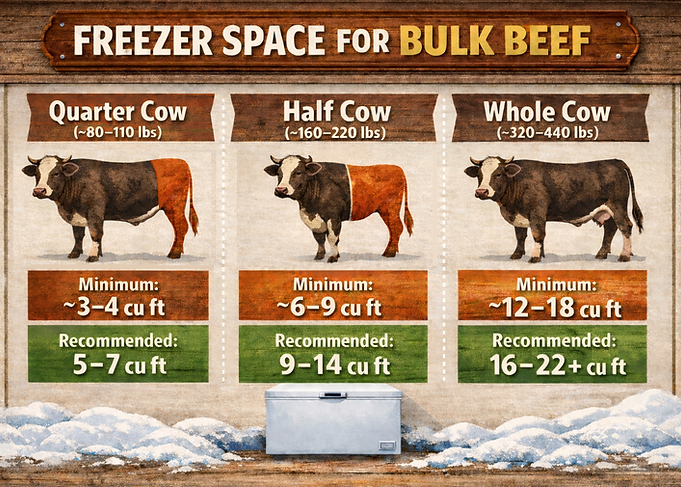
You will need about 4 to 5 cubic feet of freezer space to accommodate a quarter cow. A medium-sized chest freezer or an empty upright freezer shelf system typically suffices. However, more cubic feet of space is recommended for proper airflow and circulation.
Check the graphic below to see recommended cubic feet of freezer space for different bulk beef sizes:
How Long Does the Meat Last in the Freezer?
Vacuum-sealed beef maintains peak quality for 2 to 3 years when kept frozen at or below 0°F. If paper-wrapped, plan to consume the beef within 12 months to ensure optimal flavor and texture.
Is Buying a Quarter Cow Worth It?
A quarter cow is worth it for small to mid-sized households that eat beef regularly and want better price efficiency than smaller shares without the storage demands of a half or whole cow. It typically provides a meaningful variety of cuts at a lower per-pound cost than an eighth, while keeping the upfront investment moderate.
The trade-off is commitment. You’ll need sufficient freezer space and a plan to use the beef within several months, but many buyers find a quarter cow to be the most comfortable entry point into bulk purchasing. If you’re still deciding whether bulk buying makes financial sense overall, see Is Buying Grass-Fed Beef in Bulk Worth It? for a broader breakdown.
If you’re evaluating larger savings, compare this option with Buying a Half Cow: What You Get, Cost, Cuts, and Storage to see how cost efficiency scales with volume.
How Do I Get My Meat — Pickup or Delivery?
Pickup is usually coordinated at the processor’s facility or farm. Some ranchers also offer local delivery or regional shipping, depending on location and order size. Always confirm transportation details before finalizing your purchase.
How Long After Ordering Will I Receive My Beef?
Lead times vary, but most quarter cow orders are fulfilled within 4 to 12 weeks depending on the bulk buying process.
Does Finishing Method Affect Quarter Cow Price?
Yes. How an animal is finished plays a role in overall cost, meat yield, and flavor. Some cattle are raised and finished entirely on forage, while others receive grain supplementation during the finishing phase. These differences influence growth rate, fat development, and pricing, which helps explain why half cow costs vary from one producer to another.
Is the Cow 100% Grass Fed and Grass Finished?
Not all "grass fed" beef is truly grass finished. Always verify that the cow was raised on pasture its entire life with no grain supplementation if 100% grass finished beef is your priority.
What Breed of Cow Am I Buying?
Beef breed can have a subtle impact on flavor, fat distribution, and overall yield. Popular breeds for grass-fed beef include Angus, Hereford, and American Aberdeen. The breed you choose may influence the level of marbling and tenderness in your beef share.
How Does the Age of the Cow at Harvest Affect My Beef?
Beef harvested around 24 to 30 months of age tends to deliver balanced tenderness and flavor. Harvesting too early or too late can slightly affect meat characteristics. Work with ranchers who focus on optimal finishing ages.
Is the Beef Dry-Aged or Wet-Aged Before Butchering?
Some butchers dry-age the carcass for enhanced flavor, though it leads to slightly less packaged weight. Wet-aging is common when maximum yield is desired. Always ask which method your processor uses.
What Are the Deposit and Payment Terms?
A deposit is generally required to reserve a quarter cow, often a few hundred dollars. The balance is calculated after processing based on actual hanging weight. Review payment policies carefully before reserving.
Can I Split a Quarter Cow with Another Buyer?
It is less common but possible to split a quarter cow into eighths for smaller households. You should coordinate specifics with your processor or rancher in advance to ensure accurate division.
Conclusion
A quarter cow purchase is ideal for individuals, couples, or small families seeking the benefits of bulk buying without needing extensive freezer space. It delivers an excellent range of cuts, customization options, and savings compared to retail meat prices. To explore larger or smaller purchasing options, consider comparing a whole cow, half of a cow, or an eighth of a cow to find the right fit for your needs.
2025-12-9
2026-7-8
Find Grass-Fed Beef Near You
Ready to buy? Browse local grass-fed beef ranches near these major cities:
San Diego • Austin • Orlando • Richmond • Cleveland • Pittsburgh • Colorado Springs • Spokane
Sources:
USDA Economic Research Service. (2019). Beef Production and Price Analysis. U.S. Department of Agriculture. USDA Agricultural Research Service. (2018). Carcass Yield and Beef Processing Efficiency Report. USDA. U.S. Department of Agriculture Food Safety and Inspection Service. (2016). Freezing and Food Safety. Retrieved from https://www.fsis.usda.gov/food-safety/safe-food-handling-and-preparation/food-safety-basics/freezing-and-food-safety