

Home > Learn > Quantity & Purchasing > Buying an Eighth Cow
Buying an Eighth Cow: What You Get, Cost, Cuts, and Storage

Buying an eighth cow is a convenient, manageable way to enjoy premium grass-fed beef without needing much freezer space or a large upfront investment. This guide covers everything you need to know, including pricing, quantities, customization, storage, and key purchasing factors.
How Much Does an Eighth Cow Cost?
Prices for eighth shares are typically calculated using hanging weight, with rates generally between $6.50 and $10.00 per pound. Some sellers may offer eighths at a slightly higher per-pound rate due to additional labor in splitting shares. Always verify what is included in the final price.
Here’s how typical pricing plays out when calculated by hanging weight versus actual meat you receive:


Where Can I Buy an Eighth Cow?
Purchasing an eighth of a cow usually involves buying directly from a rancher or working with a local butcher, though some buyers use specialty online marketplaces focused on grass-fed beef. Because availability varies by region, most buyers start by finding grass-fed beef producers in their state and then compare pickup, delivery, and ordering options.
How Much Meat Do You Get from an Eighth Cow?
You can expect approximately 45 to 55 pounds of packaged meat from an eighth cow. The exact amount varies depending on the cow's size and the processor's trimming practices.
To better understand how an eighth cow translates into take-home meat, here’s a visual breakdown of the weight conversion process:

Because eighth-cow shares can vary, estimates are often used for planning. A bulk beef calculator helps you see how hanging weight translates into cost, freezer space, and take-home meat.
What Is the Live Weight of an Eighth Cow?
An eighth cow represents about 137 to 175 pounds of the original live animal weight, based on a full cow weighing 1,100 to 1,400 pounds. Live weight helps illustrate overall scale but does not directly affect pricing.
What Is the Hanging Weight?
The hanging weight for an eighth share typically ranges from 75 to 90 pounds. This figure is used to calculate your final cost before butchering and packaging adjustments.
How Much Finished (Packaged) Meat Do I Take Home?
Generally, around 60% of the hanging weight becomes packaged meat. For example, from an 80-pound hanging weight eighth share, you might take home about 48 pounds of beef.
What’s the Meat Loss During Processing?
A reduction of 35% to 40% from hanging weight to final packaged beef is standard. This loss accounts for bones, trimming of excess fat, and aging shrinkage.
How Many Calories Are in an Eighth of a Cow?
An eighth cow yields about 45–55 pounds of beef. At 800–1,200 calories per pound, that’s roughly 36,000–66,000 total calories.
How Is an Eighth Cow Butchered and Packaged?
An eighth cow is usually a "split quarter," meaning it includes a representative assortment of cuts from both the front and hindquarters. Standard packaging involves vacuum-sealing for freshness, though butcher paper wrapping may be offered as an alternative.
What Are the Most Common Cuts from an Eighth Cow?
An eighth cow typically includes a balanced variety of cuts: steaks (sirloin, ribeye), smaller roasts, ground beef, and sometimes stew meat or short ribs. The selection ensures a well-rounded beef experience, even at a smaller scale.
Here’s a visual guide to the cuts you’re most likely to get in an eighth cow share:

Can I Customize the Cut Sheet?
Customization options for eighth shares are usually limited. Many ranchers offer standardized cut sheet packages for these smaller shares to streamline processing. However, some processors allow minor adjustments if coordinated early.
Can I Ask the Butcher for Specific Preferences?
While customization is more restricted at the eighth cow level, some processors may accommodate requests such as smaller roast sizes or thinner steaks if specified in advance.
To clarify what you can and can’t customize with an eighth cow, here’s a quick checklist of common options:

Are Specialty Cuts Like Bones, Organs, or Fat Included?
Specialty items may not be included automatically in eighth cow shares due to limited volumes. However, you can often request bones or organ meats separately when finalizing your order.
How Is the Meat Packaged?
Your beef will typically be vacuum-sealed to preserve freshness and extend freezer life. Packages are clearly labeled with cut names and weights for easy freezer management.
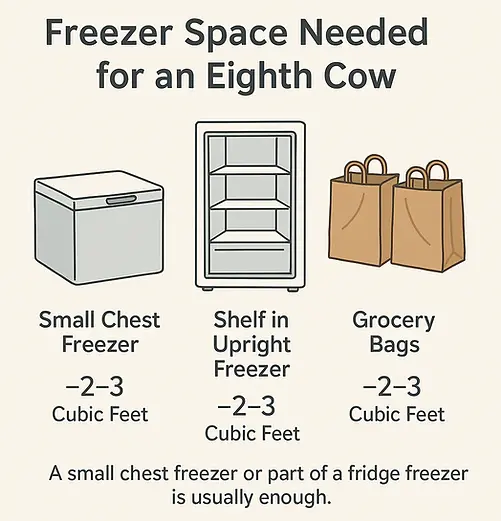
How Much Freezer Space Do I Need for an Eighth Cow?
An eighth cow requires about 2 to 3 cubic feet of freezer space. According to Michigan State University Extension, this amount is sufficient to store around 50 pounds of beef, making it a good match for a small chest freezer or a spare shelf in an upright freezer.
How Long Does the Meat Last in the Freezer?
Vacuum-sealed beef maintains peak quality for 6 to 12 months, while ground beef is best used within 3 to 4 months. These timelines are recommended by FoodSafety.gov for maintaining freshness and food safety when stored at 0°F or below.
Is Buying an Eighth of a Cow Worth It?
An eighth of a cow is worth it for smaller households, first-time bulk buyers, or anyone who wants to try direct-from-ranch purchasing without a large commitment. With roughly 45–55 pounds of beef and modest freezer requirements, it offers manageable volume at a lower upfront cost.
The trade-off is price efficiency. Per-pound cost is usually higher than a quarter or half share, so heavy beef consumers may benefit more from larger purchases. If you’re still deciding whether bulk purchasing makes financial sense overall, see Is Buying Grass-Fed Beef in Bulk Worth It? for a broader breakdown.
For comparison at the next commitment level, review Buying a Quarter Cow: What You Get, Cost, Cuts, and Storage.
How Do I Get My Meat — Pickup or Delivery?
Most eighth cow purchases involve pickup at a local butcher or farm, though some ranchers offer local delivery or even shipping for smaller orders. Confirm logistics and any delivery fees at the time of ordering.
How Long After Ordering Will I Receive My Beef?
Eighth cow orders are often quicker to fulfill than larger shares. Expect to receive your beef within 2 to 8 weeks, depending on the rancher's schedule and processing availability.
Does Finishing Method Affect the Price of an Eighth of a Cow?
Yes. Finishing method influences per-pound price, fat level, and flavor. Some cattle are forage-finished, while others receive grain supplementation. These differences affect growth time and marbling, which is why eighth-share costs vary between producers.
Is the Cow 100% Grass Fed and Grass Finished?
Always verify that the cow was both grass-fed and grass-finished if you are seeking beef raised entirely on pasture without grain supplementation.
What Breed of Cow Am I Buying?
Breed can affect marbling, flavor, and meat yield. Popular grass-fed breeds like Angus, Hereford, and American Aberdeen may slightly influence the quality of your eighth share. Check with the seller for specific breed information.
How Does the Age of the Cow at Harvest Affect My Beef?
Beef harvested around 24 to 30 months old offers the best balance of tenderness and flavor. Working with reputable producers ensures you receive optimally finished beef.
Is the Beef Dry-Aged or Wet-Aged Before Butchering?
Dry-aging enhances flavor — wet-aging retains more weight. Ask your supplier which method is used so you can manage your expectations about flavor and quantity.
What Are the Deposit and Payment Terms?
Purchasing an eighth cow typically requires a small deposit to reserve your share, with the balance due after processing based on actual hanging weight. Review deposit policies carefully before committing.
Can I Split an Eighth Cow with Another Buyer?
Splitting an eighth cow is uncommon due to the already small volume, but some people divide the beef informally between friends or family. Plan accordingly if you intend to share.
Conclusion
An eighth cow is a practical, affordable way to enjoy the benefits of grass-fed beef without needing a massive freezer or large upfront investment. It’s ideal for smaller households or first-time bulk buyers. To compare more options, explore quarter, half, or whole cow shares to match your needs and storage capabilities.
2025-12-9
2026-7-8
Find Grass-Fed Beef Near You
Ready to buy? Browse local grass-fed beef ranches near these major cities:
San Jose • Jacksonville • Cincinnati • Memphis • Buffalo • Virginia Beach • Grand Rapids • Tucson
Sources:
Michigan State University Extension. “How much to expect when buying freezer beef: Part One.” Retrieved from https://www.canr.msu.edu/news/how_much_to_expect_when_buying_freezer_beef_part_one ↩ FoodSafety.gov. “Cold Food Storage Chart.” Retrieved from https://www.foodsafety.gov/food-safety-charts/cold-food-storage-charts