
Understanding Weaning in Grass Fed Beef Production
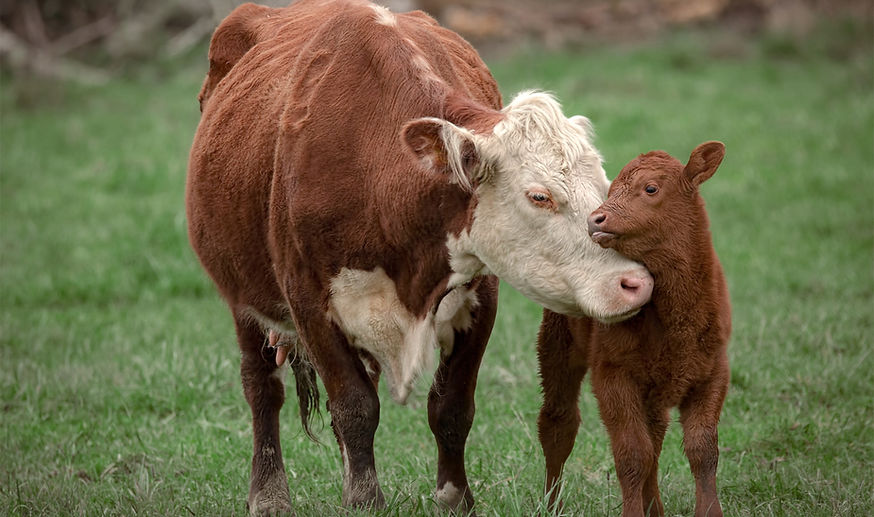
Weaning is an essential stage in grass fed beef production, marking the transition when calves stop nursing and begin developing independently on pasture. Knowing how weaning influences cattle growth, beef quality, and pasture management is critical for understanding the entire grass fed beef lifecycle.
What Is Weaning in Grass Fed Beef Operations?
Weaning refers to the process of gradually or abruptly transitioning calves off their mothers’ milk onto solid forage diets. In grass fed beef systems, this natural separation is a key milestone that shapes the animal’s health, welfare, and future meat quality.
Why Weaning Matters for Grass Fed Beef Quality
Weaning plays a major role in determining a calf’s long-term development and the eventual quality of its beef. Healthy weaning practices reduce stress, support robust immune systems, and create stronger growth patterns, all of which contribute to more flavorful and tender grass-fed beef.
According to the study "Assessment of Weaning and Backgrounding Management Practices and Their Impact on Beef Calf Performance and Health," published in Applied Animal Science (2024), calves managed with lower-stress weaning methods showed improved average daily gains and more consistent meat tenderness outcomes. The research highlights that implementing low-stress weaning techniques can positively influence growth performance and overall beef quality.
Common Weaning Methods Used by Grass Fed Producers
Grass fed beef producers employ several weaning strategies to balance calf welfare and operational efficiency. Each method influences how calves adapt to pasture-based life post-weaning.
Traditional Abrupt Weaning
Traditional abrupt weaning involves sudden, complete separation from the mother without prior adjustment. While quick to implement, it can cause significant short-term stress if not managed carefully.
Fence-Line Weaning
Fence-line weaning allows calves and mothers to see and smell each other through a fence while preventing nursing. This method eases emotional stress and typically results in smoother transitions to independent grazing.
Research from the study "Fenceline contact of beef calves with their dams at weaning reduces the negative effects of separation on behavior and growth rate," published in the Journal of Animal Science (2003), found that calves weaned using this method vocalized less and returned to normal grazing behaviors more quickly. The study concluded that providing fenceline contact between beef calves and cows for 7 days following weaning reduces behavioral indices of distress seen in totally separated calves.
Nose Flap (Two-Stage) Weaning
Nose flap weaning introduces a physical device that blocks calves from nursing while still allowing full social interaction. After several days, calves are separated completely. Studies like "The effects of weaning beef calves in two stages on their behavior and growth rate," published in the Journal of Animal Science (2005), have shown that this method reduces stress compared to abrupt weaning. Specifically, calves weaned using the two-stage method vocalized 96.6% less and spent 78.9% less time walking, indicating lower stress levels.
Here’s what these weaning methods look like side-by-side for easier comparison:

Ideal Weaning Age for Grass Fed Calves
In grass fed beef systems, calves are typically weaned between 6 and 8 months of age. The optimal timing ensures that calves have developed sufficient rumen function to thrive exclusively on forage, laying the groundwork for efficient grass-based finishing programs.
To better visualize the stages calves go through leading up to weaning, here’s a simple timeline:

How Weaning Stress Is Managed on Grass Fed Farms
Managing stress during weaning is crucial for calf welfare and long-term productivity. Grass fed producers often implement strategies such as providing familiar pastures, maintaining visual contact with mothers during transition, and ensuring nutrient-dense forages are available immediately after separation.
Low-stress weaning practices are particularly important for preserving immune function in calves. The study "Weaning at 30, 75 and 180 days: Comparison between immune responses of beef calves weaned abruptly" published in Research in Veterinary Science (2021) found that calves weaned at earlier ages exhibited higher stress markers, such as elevated cortisol levels and altered white blood cell counts, indicating a suppressed immune response. These findings underscore the significance of implementing low-stress weaning methods to maintain optimal immune function during this critical developmental period.
Impact of Weaning on Pasture Management
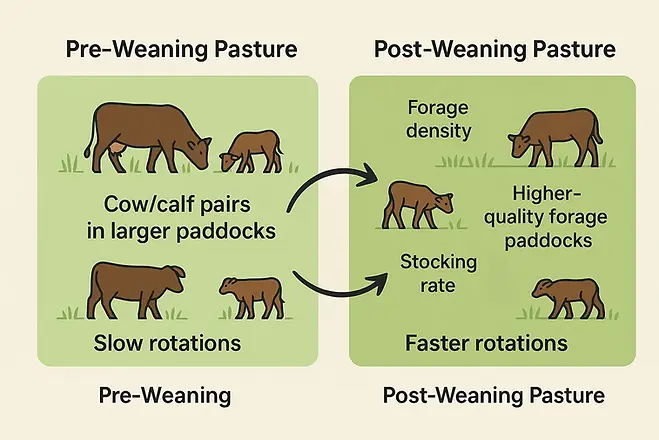
Weaning alters grazing dynamics, as newly weaned calves have different nutritional needs and grazing behaviors compared to mature cattle. Grass fed producers must adjust rotational grazing plans to accommodate the increased vulnerability of calves and maintain pasture health through proper stocking rates.
To show how pasture strategy shifts once calves are weaned, here’s a visual overview of typical grazing adjustments:
How Weaning Affects Grass Fed Beef Finishing Programs
Weaned calves enter the growing and finishing phases of production, where diet and management directly influence final beef quality. Maintaining continuous access to high-quality forage ensures steady weight gains and marbling development without reliance on grain supplements, reinforcing the principles behind grass finished beef programs.
Differences Between Conventional and Grass Fed Weaning Practices
While conventional beef operations may transition calves onto grain-based feedlots post-weaning, grass fed beef systems prioritize pasture-based growth from start to finish. Ethical considerations, natural diets, and welfare-focused management practices are key distinguishing features.
Key Terms Related to Weaning You Should Know
Weaning Weight:
The weight of a calf at the time of weaning, which serves as a critical performance indicator.
Preconditioning:
Health treatments and management practices applied before and after weaning to ease transition stress.
Backgrounding:
The intermediate phase between weaning and finishing, focusing on growing calves on forage.
Understanding these terms helps clarify how different stages of cattle management contribute to producing high-quality grass fed beef.
Why Weaning Practices Matter When Choosing Grass-Fed Beef
Understanding how calves are raised and weaned gives buyers deeper insight into the quality and ethics behind their beef. If you're interested in supporting ranchers who prioritize animal welfare and forage-based systems, the next step is deciding how much beef is right for your household. Whether you're considering buying a whole cow, purchasing a half share, ordering a quarter cow, or simply exploring the option of an eighth portion, there are flexible bulk options to match your needs.
To make the most informed decision, check out our full guide on buying grass-fed beef in bulk, which walks you through pricing, storage, cut types, and how to source from trusted producers.
Conclusion: How Weaning Shapes the Journey to Quality Grass Fed Beef
2025-12-9
2025-12-9
Weaning is more than just a milestone — it shapes the health, growth, and eventual flavor of grass-fed beef. By focusing on low-stress weaning practices and maintaining forage-based diets, grass fed producers ensure that calves grow into healthy, high-quality beef animals.
Sources:
"Assessment of Weaning and Backgrounding Management Practices and Their Impact on Beef Calf Performance and Health." Applied Animal Science, vol. 40, no. 2, 2024, pp. 123–130. https://www.appliedanimalscience.org/article/S2590-2865(24)00016-8/fulltext. Price, E. O., Harris, J. E., Borgwardt, R. E., Sween, M. L., & Connor, J. M. "Fenceline contact of beef calves with their dams at weaning reduces the negative effects of separation on behavior and growth rate." Journal of Animal Science, vol. 81, no. 1, 2003, pp. 116–121 Haley, D. B., Bailey, D. W., & Stookey, J. M. "The effects of weaning beef calves in two stages on their behavior and growth rate." Journal of Animal Science, vol. 83, no. 9, 2005, pp. 2205–2214. https://doi.org/10.2527/2005.8392205x da Rocha, M. K., et al. "Weaning at 30, 75 and 180 days: Comparison between immune responses of beef calves weaned abruptly." Research in Veterinary Science, vol. 138, 2021, pp. 1–8. https://doi.org/10.1016/j.rvsc.2021.06.002.